SEO for Beginners: A Complete Step-by-Step Guide for 2026
 By Jin Grey, Senior SEO Consultant
·Updated July 17, 2026
·19 min read
By Jin Grey, Senior SEO Consultant
·Updated July 17, 2026
·19 min read
SEO for beginners is the practice of making your website easy for search engines to find, understand, and trust — so it appears when people search, and gets quoted by AI answers. It comes down to four skills: keyword research, on-page optimization, technical basics, and earning trust through links and content. Expect results in 3 to 6 months, not days.
Table of Contents
- What is SEO, in plain terms
- Why SEO still matters in 2026
- How search engines actually work
- Keyword research for beginners
- On-page SEO basics
- Technical SEO basics
- Link building the safe way
- Local SEO for Filipino businesses
- Getting quoted by AI (AEO)
- How long SEO takes
- Your beginner learning path
- Key takeaways
- Frequently asked questions
When I started SEO back in 2008, ranking a page meant stuffing a few keywords and building a pile of links. That world is long gone. Today search is smarter, AI answers sit above the blue links, and the winners are sites that genuinely help people. The good news for you as a beginner: the fundamentals are more learnable than ever, and you don't need a degree or a budget to start.
I'm Jin Grey, an AI SEO consultant from the Philippines, and this is the guide I wish I'd had on day one. It walks you through every core piece of SEO in the right order — what it is, how search engines work, keyword research, on-page, technical, links, local, and the new skill of getting quoted by AI. No jargon dumps, no fluff. By the end you'll know exactly what to learn and in what sequence.
What is SEO, in plain terms
SEO stands for search engine optimization. It's the work of improving your website so it shows up when people search for what you offer — and, in 2026, so AI engines quote it in their answers. When someone types "best milk tea in Cebu" or "how to file BIR taxes," SEO is why certain pages appear first and others never get seen.
Strip away the jargon and beginner SEO is really four jobs:
- Find what people search for — the words and questions your audience actually types.
- Create the best page for it — content that answers the search better than anyone else.
- Make your site easy to read — so search engines can crawl and understand it.
- Earn trust over time — through links, reviews, and a track record of helpfulness.
That's the whole game. Everything else — the tools, the acronyms, the tactics — is just detail hanging off those four jobs. Keep them in mind and SEO stops feeling overwhelming.
Why SEO still matters in 2026
You've probably heard that "AI killed SEO." It didn't — it changed the target. Nearly 6 in 10 searches now end without a single click, because Google's AI Overviews and tools like ChatGPT and Gemini answer the question right on the results page. So if your only goal is a blue-link click, you're playing for a shrinking prize.
The smarter goal in 2026 is to become the source that AI quotes. When an AI answer summarizes "how to start a small business in the Philippines," it pulls from trusted pages. If yours is one of them, you get visibility, authority, and often the click anyway. The fundamentals in this guide are exactly what earn that trust — they didn't get less important, they got more.
I break down this shift in detail in my Google Gemini SEO guide, and it's the whole reason I teach beginners to optimize for both classic rankings and AI answers from day one.
How search engines actually work
Before you can optimize for search engines, you need a simple mental model of what they do. Every engine — Google, Bing, and the AI tools built on them — follows three steps.
- Crawling. Bots follow links across the web and discover pages. If nothing links to your page and it's not in your sitemap, it may never be found.
- Indexing. The engine stores and understands each page — what it's about, what entities it mentions, how trustworthy it seems. Pages that aren't indexed can't rank.
- Ranking. For each search, the engine picks and orders the pages it thinks best answer it, based on relevance, quality, and trust.
SEO is simply the work of helping engines do all three: find your pages, understand them clearly, and conclude they're the best answer. Google explains this in its own How Search Works documentation. When you hear a tactic, ask yourself which step it helps — that habit alone will make you better than most beginners.
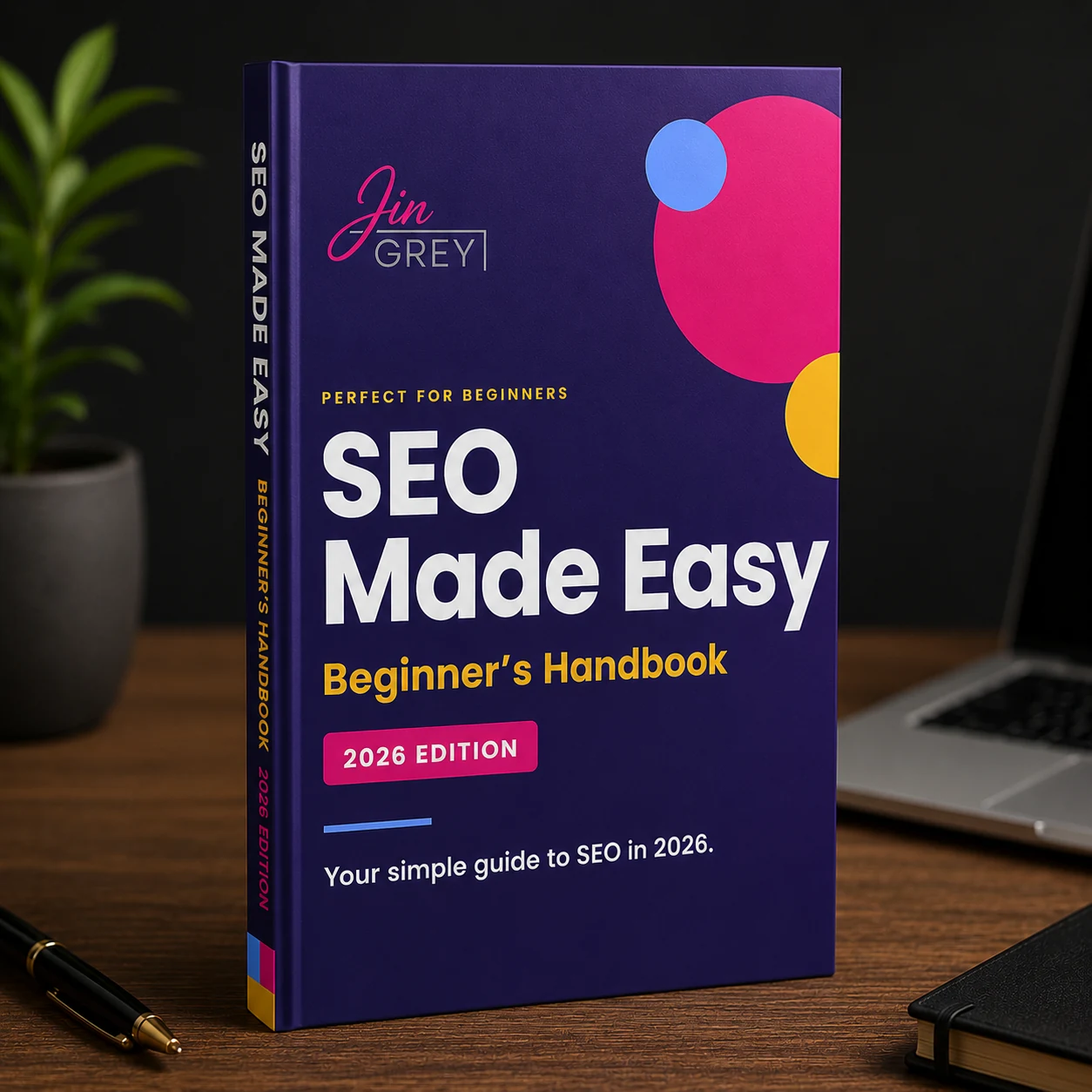
SEO Made Easy: The Beginner's Handbook
Everything in this guide, in one plain-English handbook — 65 pages, 13 chapters, quizzes, diagrams, and real exercises. The fastest way to go from zero to confident.
Get the Handbook — ₱59 ₱1,499Keyword research for beginners
Keyword research is where real SEO starts. It's the work of finding what people actually search for, then choosing targets you can realistically win. Get this wrong and you'll write great content nobody's looking for.
Here's the beginner approach that works:
- Brainstorm topics your audience cares about, then type them into Google and watch the autocomplete suggestions and the "People also ask" box.
- Go long-tail. Instead of "SEO" (impossible to rank for as a beginner), target "SEO for small business in the Philippines." Longer, more specific phrases have less competition and clearer intent.
- Match search intent. Ask what the searcher wants — to learn, to buy, to find a place. Give them exactly that.
- Use free tools like Google Keyword Planner, Google Trends, and the autocomplete itself before you ever pay for anything.
Once you've picked a keyword, the next step is turning it into a page that actually satisfies the search. I walk through that exact process in turning a keyword into a content brief.
On-page SEO basics
On-page SEO is everything you control on the page itself. It's the most beginner-friendly area because you can see and fix it directly. These are the elements that matter most.
| Element | What it does | Beginner tip |
|---|---|---|
| Title tag | The clickable headline in search results | Put your keyword near the front; keep it around 50–60 characters. |
| Meta description | The summary under the title | Write a compelling 150–155 character pitch; it drives clicks. |
| Headings (H1–H3) | Structure the page for readers and engines | One clear H1; use H2s for sections and include related terms. |
| Content | The actual answer to the search | Be genuinely useful and specific; depth beats word-count padding. |
| Internal links | Connect your pages to each other | Link related articles so engines and readers can navigate. |
| Images & alt text | Support content and accessibility | Describe each image in plain alt text; compress for speed. |
Master these six and you're doing on-page SEO better than most websites out there. It's not complicated — it's consistent. Every page you publish should tick this list before it goes live.
Technical SEO basics
Technical SEO sounds scary, but for a beginner it's really a short checklist that makes sure engines can access your site. You set most of it once and rarely touch it again.
- Speed — a fast site keeps visitors and pleases engines. Compress images and avoid bloated themes.
- Mobile-friendly — most searches are on phones, so your site must look and work great on mobile.
- HTTPS — a secure padlock is a basic trust signal; get an SSL certificate (usually free).
- Sitemap & robots — a sitemap lists your pages for engines; robots rules tell them what to crawl.
- No broken links — fix 404s and broken internal links so crawlers don't hit dead ends.
- Structured data — schema markup helps engines confirm your facts and can earn rich results.
Modern site builders handle a lot of this for you, so don't let the word "technical" stop you. If you want to go deeper on the one that matters most for AI search, read my primer on schema and structured data. For the tactics that quietly cross the line, my Grey Hat SEO handbook shows what still works and what now gets you penalized.
Link building the safe way
Links from other sites act like votes of confidence. When a respected website links to yours, engines take it as a signal that your page is trustworthy. But this is also where beginners get into trouble, so let's do it right.
- Earn, don't buy. Buying links or joining link schemes can get your site penalized. A few genuine links beat a hundred spammy ones.
- Create link-worthy content — original guides, useful tools, or local data that others naturally want to reference.
- Start local and relevant — partners, suppliers, local directories, and communities you're genuinely part of.
- Guest posting and outreach — contribute real value to relevant sites and earn a link back honestly.
Quality and relevance always beat quantity. If a tactic feels like a shortcut that games the system, it probably is — and it usually backfires. I lay out exactly where the safe line is, with real Search Console penalty examples, in the Grey Hat SEO: Made Easy ebook.
Local SEO for Filipino businesses
If you serve customers in a specific area — a café, a clinic, a service business — local SEO is the fastest win available to you. It's how you show up in Google Maps and "near me" searches.
- Claim your Google Business Profile and fill out every field completely.
- Keep NAP consistent — your Name, Address, and Phone should match everywhere online.
- Collect reviews — genuine customer reviews are one of the strongest local ranking factors.
- Add local content — pages and posts that mention your city, barangay, and the areas you serve.
For a small Filipino business, nailing these four often matters more than anything else in this guide. Local intent is high-value: someone searching "aircon repair near me" is ready to buy today.
Getting quoted by AI (AEO)
This is the newest skill in SEO, and the one that separates 2026-ready beginners from everyone still optimizing like it's 2020. AEO — answer engine optimization — is about structuring your content so AI engines quote it in their answers.
The habits that get you cited by AI:
- Answer questions directly. Lead a section with a clear, quotable answer, then expand. AI lifts clean, direct statements.
- Use clean structure. Headings, short paragraphs, lists, and tables make your content easy for AI to parse and extract.
- Add schema. Structured data helps AI confirm what your page says and who's behind it.
- Build topical trust. Cover a topic thoroughly across several linked pages so engines treat you as an authority, not a one-off.
That last point — topical trust — is why a content pillar like the one you're reading works. When you want the full system for building sites that both rank and get cited, my AI SEO & Entity SEO Website Blueprint is the exact 20-phase workflow I use with clients, and I cover the strategy free in 10 AI SEO tasks you can apply today.
How long SEO takes
Let me set honest expectations, because unrealistic ones are why most beginners quit. SEO is a compounding, long-term game. Here's a realistic timeline for someone starting fresh and doing the work consistently.
| Timeframe | What to expect |
|---|---|
| Month 1–2 | Setup and learning: keyword research, publishing your first optimized pages, fixing technical basics. Little visible ranking yet. |
| Month 3–4 | Early movement: long-tail pages start appearing, some impressions and first clicks in Search Console. |
| Month 5–6 | Traction: several pages ranking, steady traffic growth, and content getting picked up by AI answers. |
| Month 6+ | Compounding: authority builds, rankings climb, and results accelerate as trust grows. |
Anyone promising page-one rankings in a week is selling you something. Real SEO rewards patience and consistency — but once it kicks in, it keeps paying off long after the work is done. That's what makes it worth learning properly.
Your beginner learning path
Here's how I'd put it all together if I were starting today. Follow this order and you won't get lost.
- Learn the fundamentals in sequence — the topics in this guide, one at a time, so each builds on the last.
- Practice on a real site. Start a simple blog or a page for a business you know, and apply each lesson as you learn it.
- Track your progress with the free Google Search Console, so you can see impressions and clicks grow. Google's own SEO Starter Guide is a solid free companion to this article.
- Go deeper where it pays — AI SEO, local, or technical — once the basics feel comfortable.
- Consider guided learning to shortcut months of trial and error.
You can absolutely learn SEO on your own with free resources and patience. If you'd rather have the whole path in one place, the SEO Made Easy: Beginner's Handbook gives you every fundamental in order for ₱59, and SEO for Beginners: How to Get Your First Page 1 Ranking maps out the exact steps to that first ranking. Our live masterclasses and AI SEO course take you further with hands-on guidance. Whatever path you pick, the key is to start and stay consistent.
Key takeaways
- SEO for beginners comes down to four jobs: find what people search, create the best page, make your site readable, and earn trust.
- In 2026 the goal is both to rank and to become the source AI answers quote.
- Learn the fundamentals in order — keywords, on-page, technical, links, local — and practice on a real site.
- Expect meaningful results in 3 to 6 months; SEO compounds, it doesn't happen overnight.
- A structured resource like the SEO Made Easy: Beginner's Handbook saves you months of scattered learning.
Frequently asked questions
What is SEO for beginners?
SEO (search engine optimization) is the practice of improving your website so it shows up when people search on Google — and, increasingly, so AI answers quote it. For a beginner, it comes down to four things: understand what people search for, create the best page for it, make sure Google can read your site, and earn trust over time.
How do I start learning SEO?
Start with the fundamentals in order: how search engines work, keyword research, on-page SEO, technical basics, links, and local SEO. Practice on a real site as you learn. A structured resource like the SEO Made Easy: Beginner's Handbook gives you all of it in one path so you are not stitching together random blog posts.
How does SEO actually work?
Search engines crawl the web, index the pages they find, then rank them for each search based on relevance, quality, and trust. SEO is the work of helping engines find your pages, understand them, and decide they are the best answer for a given query.
Is SEO still worth it in 2026 with AI answers?
Yes, but the goal has widened. Nearly 6 in 10 searches now end without a click because AI summaries answer them. So the aim is no longer only to rank a blue link, but to become the trusted source that AI engines quote. The fundamentals still get you there — plus a few new habits.
How long does SEO take to work?
Plan for about 3 to 6 months to see meaningful movement, sometimes longer for a brand-new site. SEO compounds — early work keeps paying off — but it is not instant. Anyone promising page-one rankings in days is not being honest with you.
Can I learn SEO on my own?
Absolutely. SEO is one of the most self-teachable digital skills. You need a clear path, a real site to practice on, and patience. A beginner handbook plus consistent practice will take you further than scattered videos, because you learn the pieces in the right order.
Do I need to know how to code to do SEO?
No. Most SEO — keywords, content, on-page, local — needs zero coding. Technical SEO touches a few settings and files, but they are explained in plain language in any good beginner guide, and modern site builders handle much of it for you.
What is keyword research?
Keyword research is finding the words and questions real people type into search, then choosing the ones you can realistically rank for. As a beginner, target specific, lower-competition phrases (long-tail keywords) rather than broad, crowded terms.
What is on-page SEO?
On-page SEO is optimizing the things on your page: the title tag, meta description, headings, content, images, and internal links. It tells search engines and readers exactly what the page is about and why it deserves to rank.
What is technical SEO?
Technical SEO makes sure search engines can crawl, render, and index your site without friction — fast loading, mobile-friendly design, a clean sitemap, secure HTTPS, and no broken links. Get the basics right once and most of it takes care of itself.
What is link building?
Link building is earning links from other websites to yours. Search engines treat quality links as votes of trust. For beginners, focus on earning a few relevant, genuine links rather than chasing volume or buying links, which can get a site penalized.
What is local SEO?
Local SEO helps a business get found by nearby customers — in Google Maps and 'near me' searches. The core moves are claiming and optimizing your Google Business Profile, keeping your name, address, and phone consistent, and collecting reviews.
What is AEO and how do I get quoted by AI?
AEO (answer engine optimization) is structuring your content so AI engines like Google's AI Overviews, ChatGPT, and Gemini quote it. You do it by answering real questions clearly and directly, using clean structure and schema, and building topical trust so AI treats you as a reliable source.
How much does it cost to learn SEO?
You can start for free with practice and public guides, but a focused, well-organized resource saves you months. The SEO Made Easy: Beginner's Handbook is on launch sale for ₱59, which makes a complete learning path cheaper than a cup of coffee.
What is the best book to learn SEO for beginners?
The best beginner resource is one written for 2026 that covers fundamentals and the new AI-search reality in plain English. The SEO Made Easy: Beginner's Handbook by Jin Grey does exactly that — 65 pages, 13 chapters, quizzes, diagrams, and practical exercises.
Is SEO a good skill for freelancers and VAs in the Philippines?
Yes. SEO is one of the highest-value skills a Filipino freelancer or virtual assistant can offer, because businesses everywhere need it and it pays in dollars. Learn the fundamentals, practice on real sites, and you can offer SEO as a service or land remote roles.
Jin Grey is an AI SEO consultant from the Philippines who has worked in SEO since 2008, helping businesses rank on Google and get cited by AI engines. He leads the AI SEO track at AI Vibe PH and writes the SEO strategy used across the site.
Start your SEO journey today
Get every fundamental in this guide — plus quizzes, diagrams, and exercises — in one plain-English handbook built for 2026. Go from zero to confident for the price of a coffee.
Get the Handbook — ₱59